Doom scrolling is guaranteed to ruin your day. It happened to me the other day when because of boredom I spent my whole afternoon on Social Media. I stumbled upon a post from a relatively unknown vestment maker. I am a priest so I am automatically the target audience of that post, but it reached me organically as it has been shared by a friend of mine.
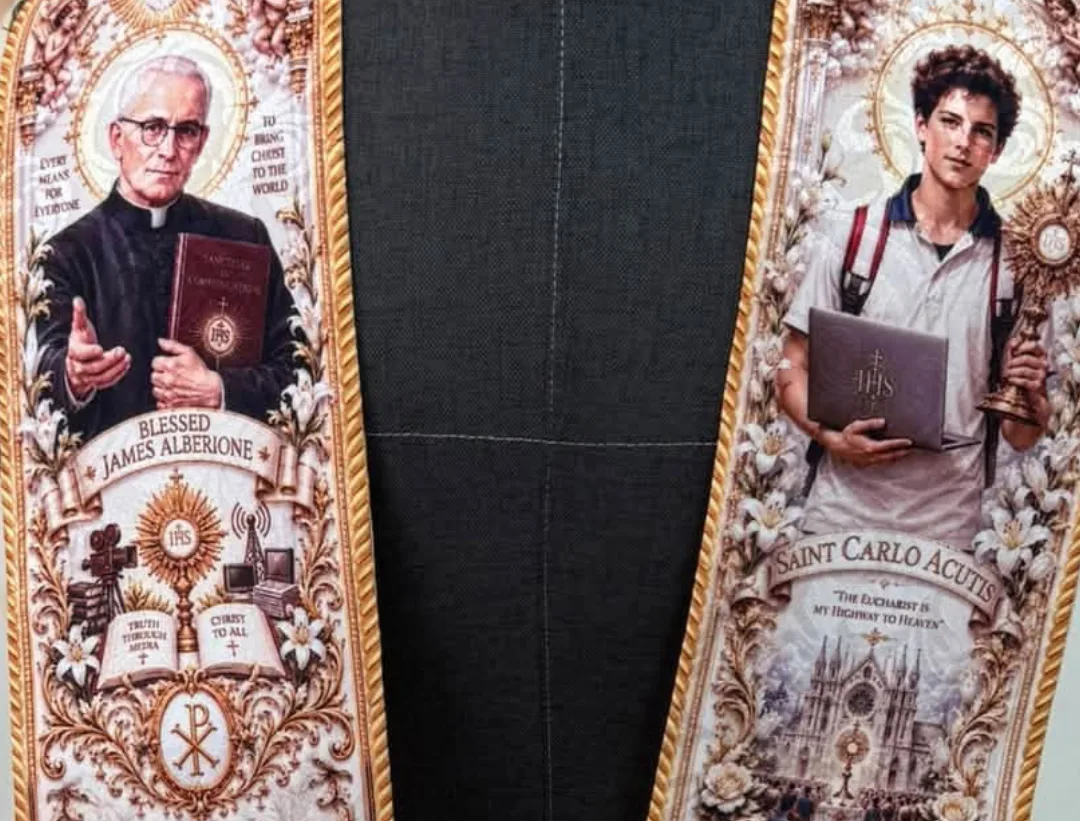
As I clicked the photo to see the design of the vestment they are advertising (it was a stole), I felt utter disgust. It was a white stole with an image on the right hand side of Blessed James Alberione (the Founder of the religious family where I belong) and on the left hand side is that of St. Carlo Acutis and all around it is an array of gold leafing. With this description, I know you might be asking, why should these provoke such a strong reaction from me? Well, because it is unequivocally AI-made.
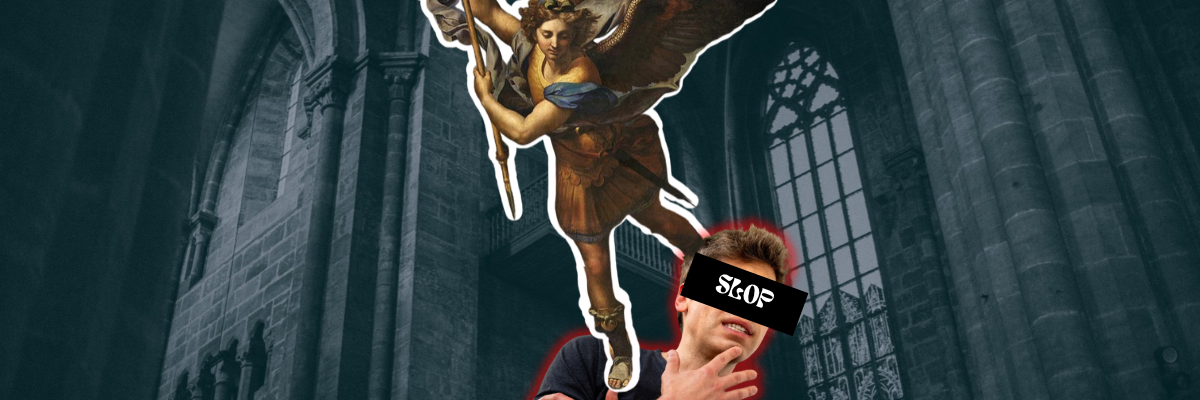
No, not the image of the stole. It was real. It is a real picture. The design itself is AI-generated and no one can say otherwise. For starters, the face of Bl. Alberione is not HIS face, but that of a generic old white man that AI always generates just like when you see an AI generated picture of Pope Leo XIV, you automatically know that it is NOT him. Another tell-tale sign is the gold leafing since it is uncannily similar to posts made with generative AI which looks the same regardless of what is its content: a parish bulletin, a birthday greeting card, an obituary…
Generative AI is NO Artist
This happened just a few days after the Pope’s address to artists and museum curators where he effectively denounced AI-generated visuals as not really worthy of being called art. Because it is not.
What makes art art is not the harmony of lines or colors or the technique used, albeit the most “perfect” in form. Art is fundamentally a human exercise. It is one of those things that cannot really occur naturally in the wild. Beauty in nature is called creation but beauty expressed by the human genius using creation is called art.
This is why AI-generated visuals cannot really be called art. It lacks the human in the equation. One can argue that the human is still involved as the one who writes the prompt and so it is still his genius. But thinking is not the be all and end all of art. The physical contact of the artist’s hands with his brush or his canvas, the pen of the composer over the paper, the movements of the body of the dancer, all of these are not merely auxiliary (utilitarian) things in the creation of art. These are parts of the very essence of art.
In fact, no one calls Pope Julius II as the designer of St. Peter’s Basilica even though it was his prompt, his commission of great artists like Michaelangelo and Bernini that was behind the construction of this great marvel.
AI Has No Place in the Liturgy
The Arts has always been an integral part of Catholic Liturgy: from architecture to visual arts to music. Catholic Liturgy employs art in all of its variety to give praise to the Creator. This is the theology of the Incarnation in praxis: the visible and the invisible coexist in a single hymn of praise of the Creator of All Things, visible and invisible.
The human hands have always been involved in this chorus of the arts in the Liturgy. That is why we worship in a building and not under a tree; why we put arranged flowers and not potted ones; why the altar is a rectangle sculpted from stone and not just the raw natural state of the rock; why we offer bread and wine and not just the wheat itself and the grapes. Because human hands have intervened in God’s creation and thus both creation and human genius now give praise to the Creator.
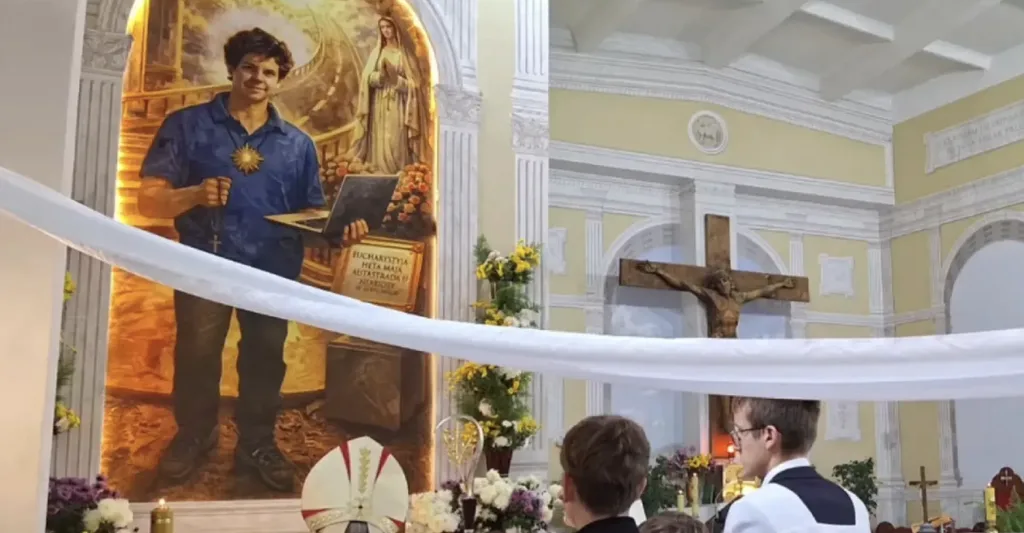
AI disrupts this relationship. AI replaces the human in this song of praise and thus disrupts the theology of the Incarnation behind the Liturgy. It might look “perfect” and maybe it is “cost effective”, but art in the Liturgy needs the imperfection of human hands because God perfects it himself and worship should not be worried about capitalistic values.
Let us address these two things before we conclude.
Are AI Visuals Perfect?
Anyone who has been chronically online these past few years is already aware of AI slop and hallucination. AI visuals can indeed be useful in giving visual “reality” to what we have in mind. For example, when you want to imagine yourself as a teenager in the 90’s. But, it is still prone to inconsistencies and sloppiness that can be gleaned when viewed more critically.
Worse is when it hallucinates and gives us an image that seems to be 95% correct but still the 5% is so important that it already changes reality. Consider the faces I’ve told you above. Yes, you still recognize that image’s appearance, but you know that it is not him/her.
And that’s okay when you can recognize this “small” error, but imagine what happens to the old people who really love AI generated visuals or to the future generations that may only have access to these AI generated slops.
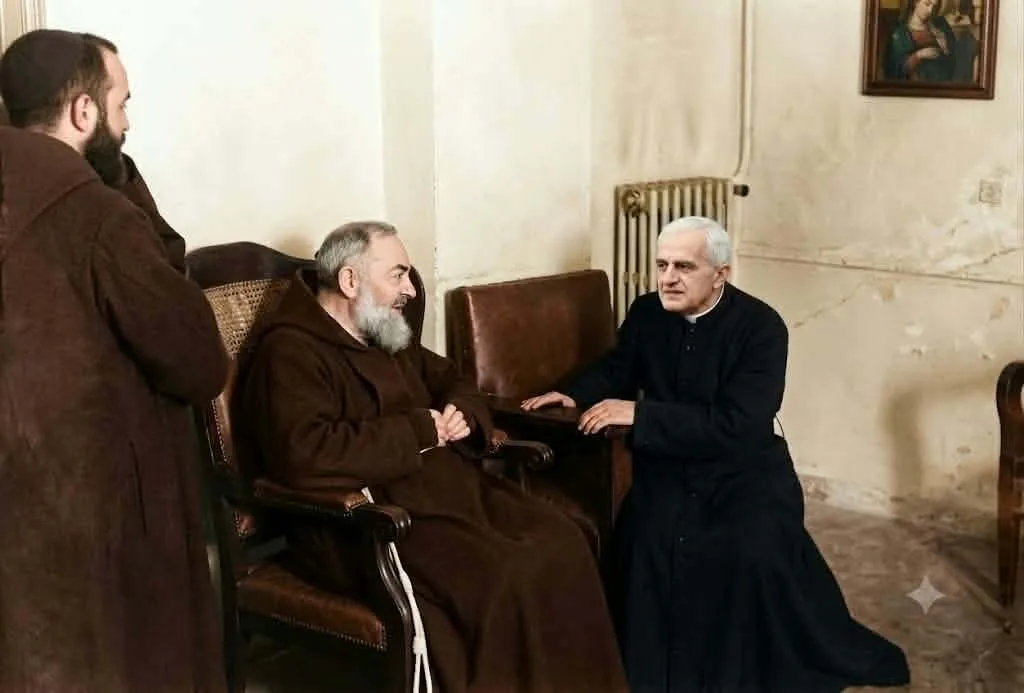
One can argue that Generative AI will only become more perfect as the technology becomes more sophisticated as it learns more from the algorithm. But, that is exactly what the problem is. It is dependent on the algorithm and now it is starting to cannibalize itself. That is, it is now learning from its own generated images that its future “perfected” state is just the “perfection” of its own slop.
To simplify this we can compare it to a lie. The most convincing lie is a lie that even the liar himself believes to be true.
So even if AI generated images, especially those used in our churches, SEEM to be very pleasing to the eyes, it is still a LIE. And we are a religion of the Truth, not as a cold hard fact, but as a living person: Jesus Divine Master Way, Truth, and Life. Thus, it will be a betrayal of Christ the Truth himself.
Cost effectiveness?
I remember the best advice I received from a priest: if it is for the Lord it should be the best. Of course, we have to recognize that we do not have an infinite amount of resources. But this does not mean that the price tag should be the main concern.
The Liturgy and the arts in it should not concern itself with market value.
Since the 60’s there is a constant desire of some sectors in the Church to “simplify” things and to “take out the Imperial vestiges” especially those that concerns liturgical art. At first glance it seems to be faithful obedience to Christ’s poverty. But, even St. Francis of Assisi, the very best example of poverty, himself has ordered his brothers to use only the best and most precious of materials for the Liturgy.
What is behind this drive to simplify the liturgical arts is not theological but ideological. We have been captive not by the real concern for the poor, but by the market economy.
This is also true when we discuss using AI in homilies. Just a few weeks ago the Dean of the College of Cardinals, Cardinal Tagle, denounced this emerging practice. Yes, it saves time and in this modern world, as they say, “time is money”. But the Liturgy is beyond money. So preaching just like the arts in the Liturgy should involve the struggle of the human as a fitting offering.
Ban AI In The Liturgy
And so after this rant, there is only one conclusion: AI whether its generated images or music (the fake gregorian chants you can find in Spotify) or homilies should not have any place in Christian worship. It perverts the theology of the Incarnation and makes the Liturgy a postcapitalistic product to be exploited and not as the worship in Spirit and in Truth.
Soli Deo Gloria.
Discover more from Tamang Usapan Podcast
Subscribe to get the latest posts sent to your email.