
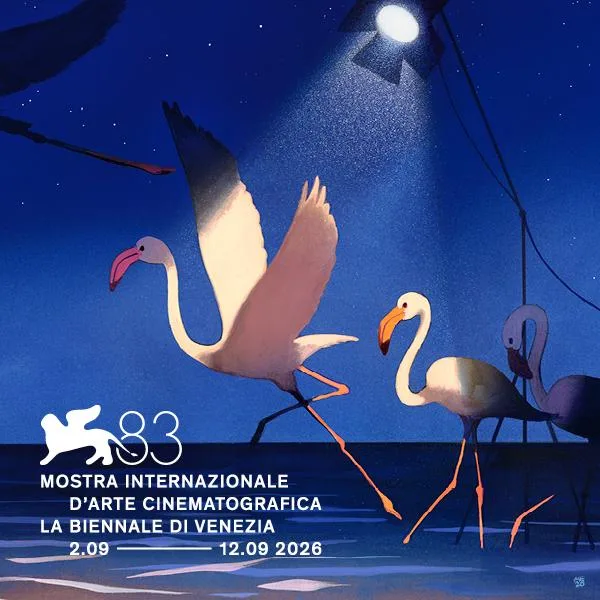
From September 2–12, the Venice International Film Festival celebrated its 83rd edition. Amid the usual frenzy of world premieres and showcases of auteur cinema, the festival offered a timely reminder of the power of cinema as a medium for profound, even spiritual, reflection. Many of the masterpieces featured in the program raised crucial questions about grace, redemption, guilt and transcendence, and yet they did so without ever claiming the label of “religious” or “Catholic” cinema.
Perhaps this is one of the most fascinating aspects of contemporary cinema: its ability to articulate profoundly theological questions without resorting to explicitly religious language. Through narrative conflict, visual symbolism and dense existential silences, the modern film evokes a horizon of transcendence in which the question of God persists not as an affirmation, but as an absent presence.
Cinema and Theology
The relationship between cinema and theology has always been shaped by this tension between visibility and concealment. Cinema is fundamentally an artifice of appearances, yet its most powerful and enduring effects often arise from what remains withheld, unspoken or only partially revealed. This power becomes especially evident in secular works that nevertheless confront ancient theological dilemmas: Why does suffering persist? What is the true meaning of sacrifice? How does one live with guilt, and where can grace be found in a thoroughly secularized world? In this sense, the screen becomes a space in which God is spoken of precisely by not being named.
Rather than secretly encoding a dogma or serving as a rigid allegory of faith, many modern films operate as implicit theological texts. They simply make visible the human condition before the absolute, capturing our finitude, loss, desire and hope. A film does not need to mention Christ, the saints, or Church doctrine in order to draw upon a profoundly spiritual imaginary. What matters is whether the work approaches human existence with a depth that remains open to mystery and moral seriousness.
A look at some recent films
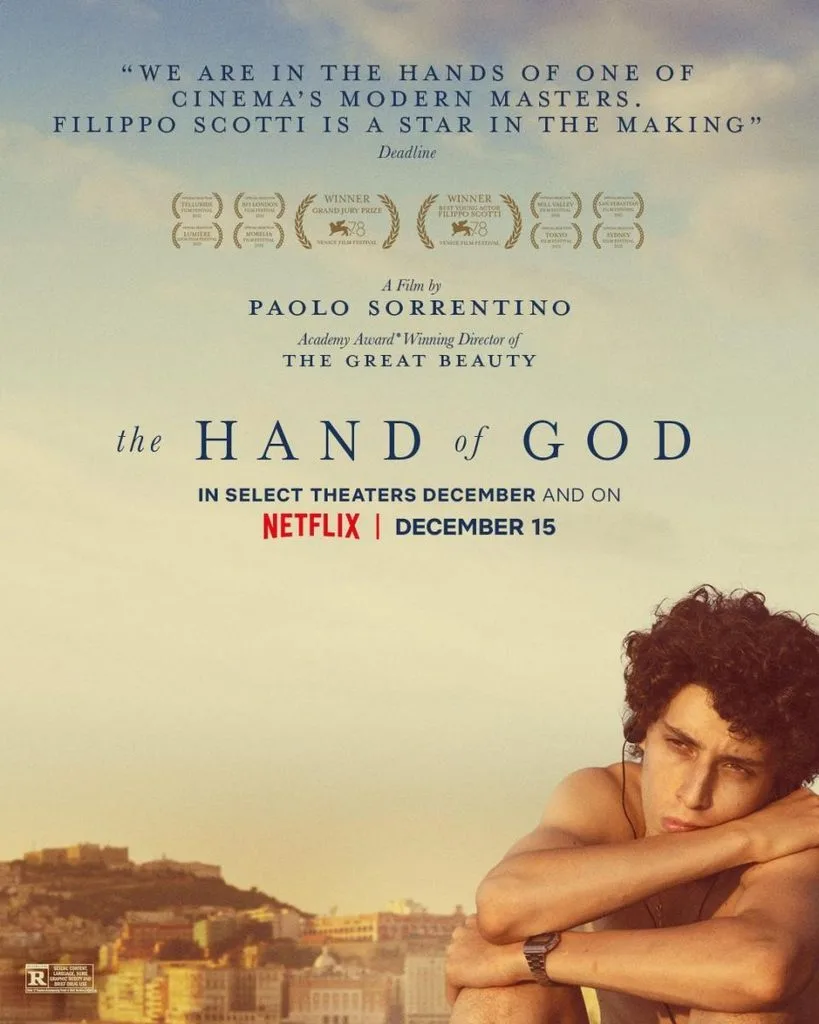
Several recent films illustrate this beautifully. The Hand of God (2021), by Paolo Sorrentino, evokes theological currents while remaining largely an autobiographical and secular coming-of-age story. It is not a confession of faith, but a meditation on memory and loss. Its power lies in the way it makes providence conceivable only in retrospect—that is, something perceived entirely through the fragile and retrospective gaze of memory.
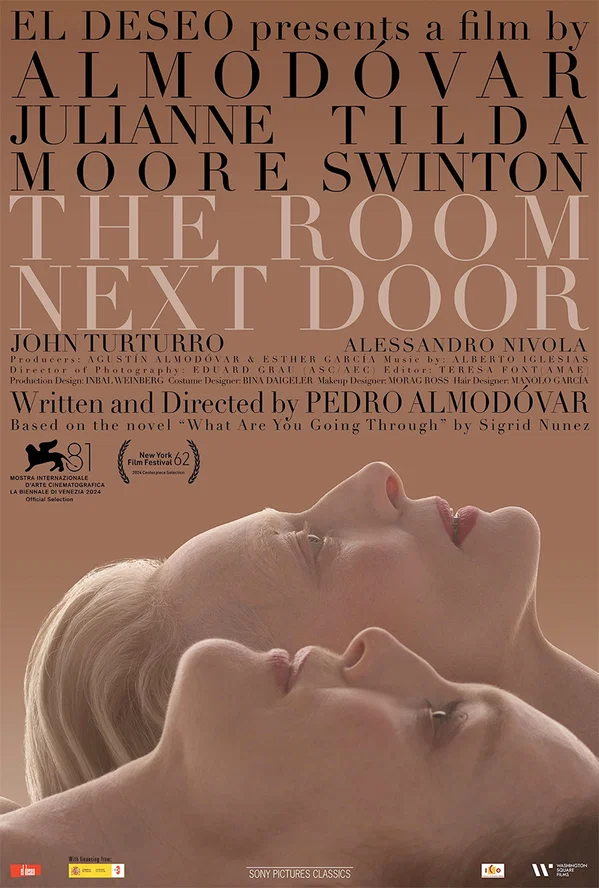
By contrast, The Room Next Door (La habitación de al lado, 2024), by Pablo Almodóvar, takes a different but equally compelling path. Focusing on mortality and euthanasia, the film enters directly into a theological dialogue on dignity, death and the limits of human autonomy. Almodóvar does not need to invoke the divine; rather, the film’s silence on the question only intensifies the moral weight of its inquiry, demonstrating how contemporary cinema can charge the questions surrounding the end of life with immense spiritual tension.
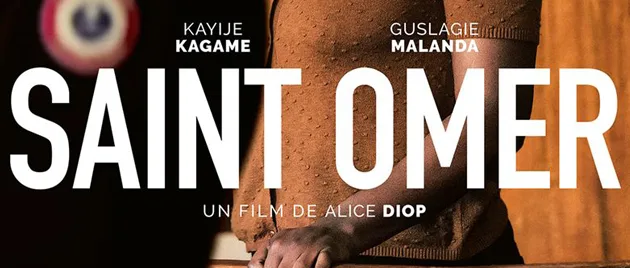
Saint Omer (2022), by Alice Diop, approaches all of this through a study of moral opacity. By exploring judgement, motherhood and racial isolation, the film refuses to resolve guilt through a clear-cut verdict of innocence or culpability. Instead, it forces the viewer to confront the agonizing difficulty of truly understanding the suffering of another human being. It is precisely here that its theological resonance emerges: in the encounter with an irreducible otherness that challenges human judgement.
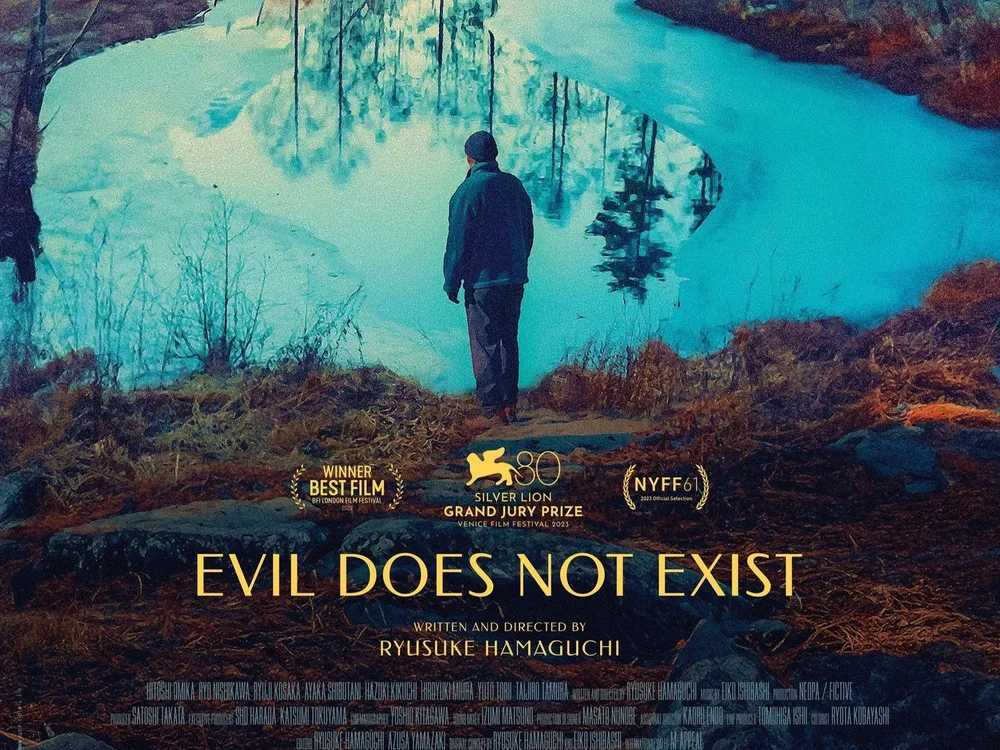
A similar logic animates Evil Does Not Exist (2023), by Ryusuke Hamaguchi. Even before the narrative unfolds, the title itself poses a colossal metaphysical question. The film invites us to reflect on the fragility of our moral order, the quiet clandestinity of violence and the instability of human categories such as good and evil. Its theological value does not lie in the answers it provides, but in the profound space it creates for moral and ontological unease.
In conclusion
These works, suggest that the indirectness of contemporary cinema may be its most powerful theological instrument. In an age marked by rapid secularization and profound moral uncertainty, cinema continues to register experiences of sacrifice, judgement and hope that exceed purely rational and immanent explanations. Cinema does not need to be explicitly religious in order to participate in theological discourse. When a film succeeds in unveiling the hidden depths of human existence, its silence is never empty: it is the very medium through which transcendence can be perceived.
Discover more from Tamang Usapan Podcast
Subscribe to get the latest posts sent to your email.


