
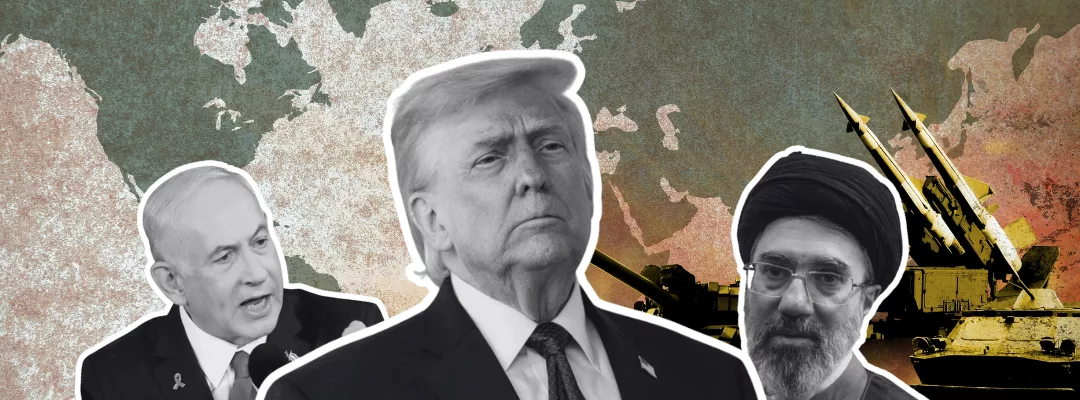
Since the outbreak of the 2026 US-Israel-Iran War and later on with the very public spat between the White House and the Holy See, internet search for the Just War Theory has spiked world wide. Politicians of all ideologies and internet sleuths were dabbling in theology to answer the question: is the War in Iran just?
In this article, I will try to contribute to this topic that has been populating tweets, web searches and pages, etc.
Our limitation: just the Just War Doctrine, nothing else
For this, we have to put a limitation. We are not trying to answer here if the “preemptive strike” of the 26th of February of 2026 by the allied forces against the Islamic Republic of Iran is strategically (whether militarily or politically) justified.
In fact, one can argue that the nuclear threat and the state sponsoring of regional and global terrorism by one of what Former US President George W. Bush called the “Axis of Evil” is enough to justify an attack when the once-in-a-lifetime conditions were met.
Rather, we will only concern ourselves with the question in the light of the Just War Doctrine as was ideated by Augustine and Aquinas and later adopted by the Catechism. We will try to answer the question, therefore, by putting its justifications side by side with the requirements for a Just War put forward by the Catechism of the Catholic Church.
What Just War is
The first thing to clarify is what Just War is. We have already recorded a two episode podcast about this topic immediately after the outbreak of this war. There, we discussed the topic in general terms, without trying to evaluate this specific war as we are doing now. If you want to learn more about Just War Theory/Doctrine, I would like to recommend to you to listen here and here.
But, if you do not understand Filipino, or you don’t have time to listen to us rant, then let me give you the gist. Just War Doctrine is not a license to wage war. Rather, it is a product of the realization of the Church that the Christian ruler will have to face wars even if he does not really want it. Such is the pitiful state of this valley of tears.
St. Augustine reminds us that war is always the result of sin and is therefore always morally bad. But, the Church is not a blind idealist, she knows that there are times that Christian rulers cannot but use violence in order to protect a greater good. This is the origin of Just War Theory.
Aquinas’ requirements
St. Thomas Aquinas further systematized it in the Summa Theologiae, when he gave the pre-requisites for a Just War:

“In order for a war to be just, three things are necessary. First, the authority of the sovereign by whose command the war is to be waged... And as the care of the common weal is committed to those who are in authority, it is their business to watch over the common weal of the city, kingdom or province subject to them. And just as it is lawful for them to have recourse to the sword in defending that common weal against internal disturbances, when they punish evil-doers, according to the words of the Apostle (Romans 13:4): "He beareth not the sword in vain: for he is God's minister, an avenger to execute wrath upon him that doth evil"; so too, it is their business to have recourse to the sword of war in defending the common weal against external enemies. Hence it is said to those who are in authority (Psalm 81:4): "Rescue the poor: and deliver the needy out of the hand of the sinner"; and for this reason Augustine says (Contra Faust. xxii, 75): "The natural order conducive to peace among mortals demands that the power to declare and counsel war should be in the hands of those who hold the supreme authority."
Secondly, a just cause is required, namely that those who are attacked, should be attacked because they deserve it on account of some fault. Wherefore Augustine says (QQ. in Hept., qu. x, super Jos.): "A just war is wont to be described as one that avenges wrongs, when a nation or state has to be punished, for refusing to make amends for the wrongs inflicted by its subjects, or to restore what it has seized unjustly."
Thirdly, it is necessary that the belligerents should have a rightful intention, so that they intend the advancement of good, or the avoidance of evil… For it may happen that the war is declared by the legitimate authority, and for a just cause, and yet be rendered unlawful through a wicked intention. Hence Augustine says (Contra Faust. xxii, 74): "The passion for inflicting harm, the cruel thirst for vengeance, an unpacific and relentless spirit, the fever of revolt, the lust of power, and such like things, all these are rightly condemned in war." (ST II, Q40, A1)
The Catechism’s Four Requirements
The Catechism of the Catholic Church adopts this tradition, especially Aquinas’ three requirements and adds a new one that concerns modern weapons. CCC 2309 requires a strict conditions that must be met at one and the same time in order to justify a war:
- The damage inflicted by the aggressor on the nation or community of nations must be lasting, grave, and certain.
- All other means of putting an end to it must have been shown to be impractical or ineffective.
- There must be serious prospects of success.
- The use of arms must not produce evils and disorders graver than the evil to be eliminated. The power of modern means of destruction weighs very heavily in evaluating this condition.
The War in Iran in the light of the Catechism’s requirements
Let us now put under the light of the Catechism the question of whether or not this war can be morally justified.
Objective evil
The first requirement supposes an objective evil to have been committed. Historical examples for this are the Blitzkrieg invasions of Nazi Germany in World War II, Iraq’s unprovoked attack on Kuwait in the Gulf War, or the 9/11 attack that provoked the attack on Afghanistan (and later on, Iraq, although that is questionable if it is justified).
The question, therefore, is if there is or was an objective lasting, grave, and certain damage Iran did against the allies. The US invokes the threat of nuclear armament of Iran to justify the attack. Israel, on the other hand, can invoke Iran’s continued sponsorship of regional terror groups that wage proxy wars against them.
Thus, the Israeli justification can be said to be objective. Grave damage has indeed been done. US justification, however, is another story. Presupposed evil cannot morally justify war, thus preemptive strikes are always outside the bounds of Just War.
War as the last resort
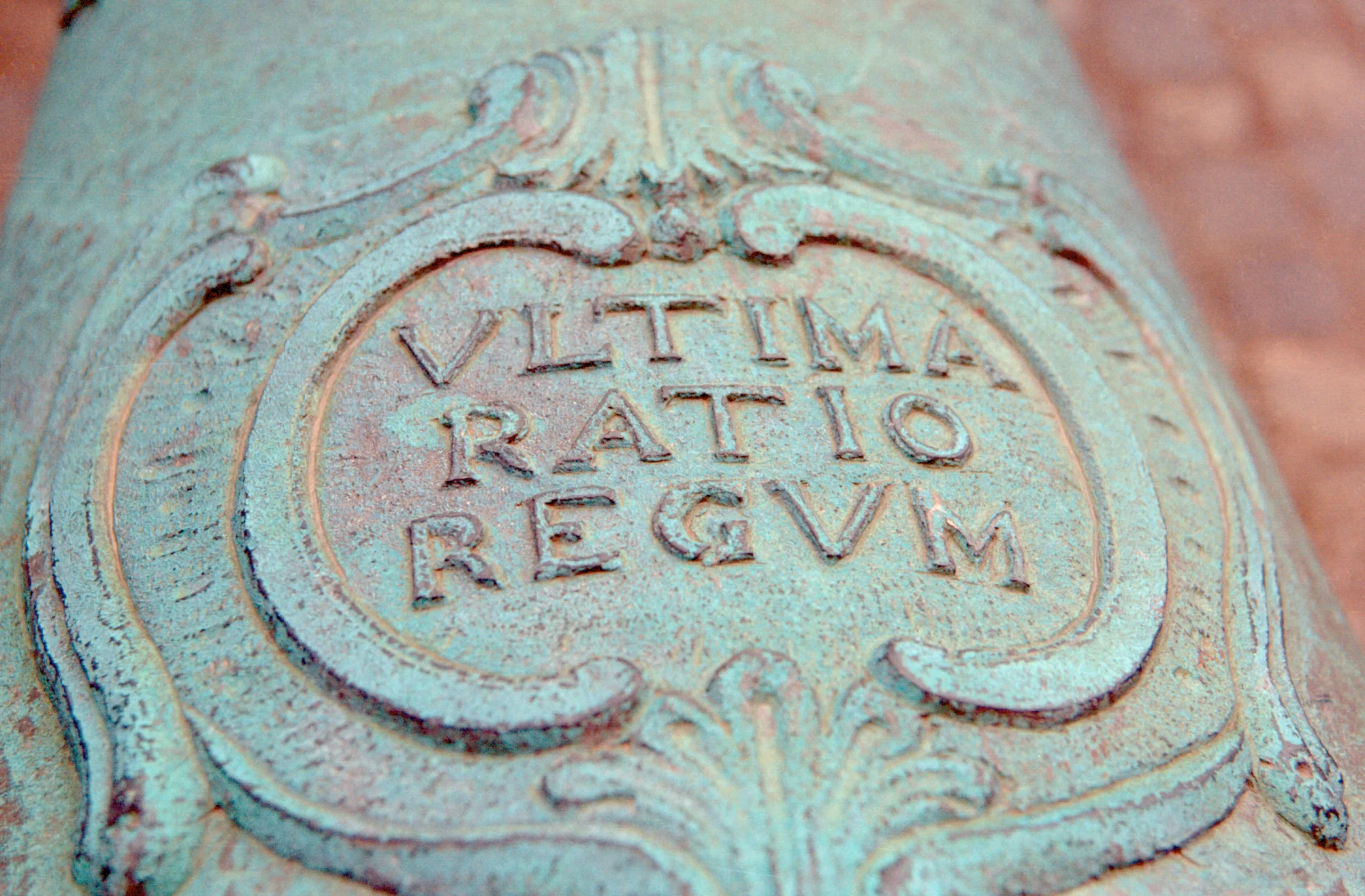
War should always be the last resort. The classical dictum is that war is Ultima Ratio Regum, that is, war is the last argument of kings (a phrase attributed to Louis XIV of France). Thus, war should only be declared when all other diplomatic avenues failed.
One can argue that the allies have already used all diplomatic cards they have over the almost 40 years of the Islamic regime. Things like economic sanctions, negotiations, etc. And all of these have not stopped the regime in their quest to refine uranium or in sponsoring terrorism.
Serious prospect of success
At the outbreak of the war, the messaging of the allies was the hope for the people of Iran to take the reins of their freedom and topple the regime. The allies have already facilitated it by decapitating the regime, but since then it seems that the regime was more prepared for this doomsday scenario than was expected.
The question now lingers in the minds of observers if there is indeed a serious prospect of success in this war or will this just continue to be a war of attrition that will only hurt more countries economically and the countries involved in terms of life and infrastructure.
However, the ones who should answer this question are those who are at the helm of command. For all we know, they might indeed be convinced at the time of the prospect of success, and indeed they might still be, though cognizant of the fact that it may take a while.
Therefore, in this third requirement we cannot have a definitive answer.
Moderation in the use of arms
We will not know to what extent the use of arms has been employed in this war until its conclusion. However, the recent threats by the US President to attack civilian infrastructure like bridges and power plants may be skirting the limits of this requirement. And, of course, the worst of all was the threat to “end an entire civilization”.
Thank God that it has not come into fruition but if it has it would have been a clear violation of this requirement of moderation of arms use.
Is it justified?
With these, we go back to the question: Is the war in Iran just?
At first glance, the result is inconclusive. There was no objective damage done. It seems to indeed be the last resort. The prospect of success and the use of arms can only be answered by the authorities.
But, remember, the requirement is that these must be met one and the same time. Thus, the failure to establish an objective lasting grave damage by the supposed aggressor renders the whole argument for its moral justification null and void.
Again, what we are concerned here is the moral justification of the war in light of the Just War Theory, not its strategic justification or whether it complies to the UN Charter’s Jus ad bellum (right to wage war) and jus in bello (law in war).
Further, as it is only a contribution of another internet sleuth, this should not be taken as a definitive answer. The fact that I am a priest does not mean that this is magisterial. The Church’s mission is to always advocate for peace, thus she must always raise the question. The duty to answer and justify their actions lies on the political and military leaders that oversee this war.
But, with that disclaimer out of the way, is the war in Iran just? At least for me, I can say that it is not.
Do you agree? No? Let us engage in healthy discussion.
Discover more from Tamang Usapan Podcast
Subscribe to get the latest posts sent to your email.


