Yup, you might be getting tired of it, but here I am, just a few days after Christmas, writing about AI. Well, for various reasons.
First of all, Merriam-Webster announced that 2025’s Word of the Year is “slop”, that is, AI slop or that low quality AI generated content that now plagues our social media (and maybe, academic papers and podcast blogs too?). Second, I’ve just finished watching a video from one of my favorite artist-youtuber, Jazza, on his views on AI (especially, AI generated “art”), and that inspired me to write this as a transparency stuff to make it clear how do we use and integrate Artificial Intelligence in your favorite background noise.
Of course, we’ve also had an episode on AI ethics already, so you might want to listen to it here.
AI who and AI what?
But first, let us clarify what we mean by AI. We can classify AI into two categories (this is how I categorize them, so there really are no academic or technical papers that support it. Suffice it to say that this is my own invention): auxiliary AI and generative AI.
Auxiliary AI are stuff our computers and smartphones do for us to assist us on “menial” tasks. These have been with us since the Turing Machine. Stuff like autocorrect or that squiggly red line that appears when you type the wrong spelling (or at least what the computer olympic deities think are wrong) of a word.
Generative AI is indeed a term used by the industry. It refers to AI capable of “producing” a desired result fed through prompts, usually textual. You have ChatGPT and Gemini for texts, Sora and Nano Banana for video, Dall-e or Midjourney for images, etc. However, the use of the term “generative” is misleading because it does not generate in the sense that it creates things. It only appears to do so since it takes from databases that it has learned from.
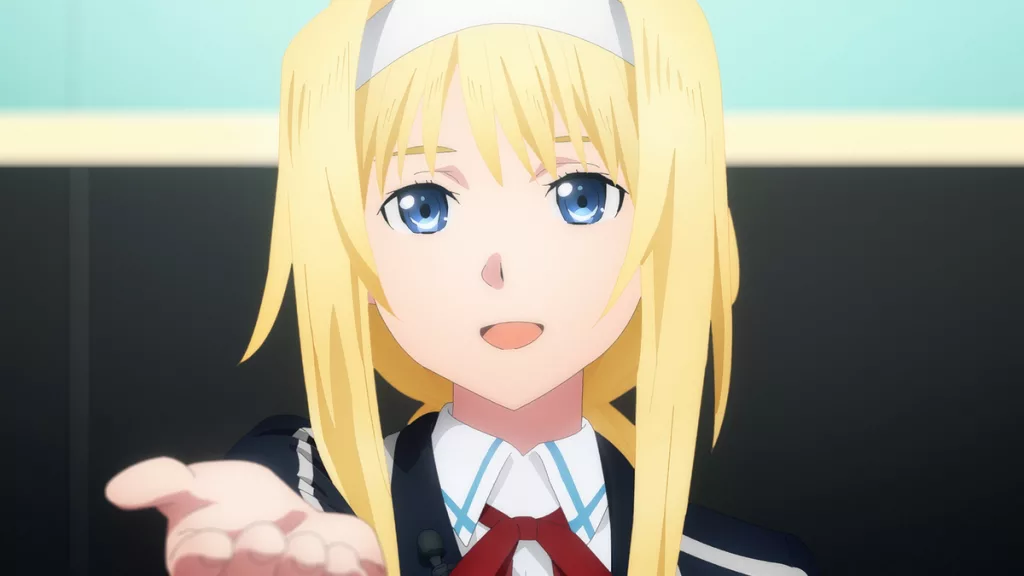
If you have read the light novel and watched the anime, Sword Art Online, especially the Alicization arc, you might be familiar with the term “bottom-up” AI or “artificial fluctlights”, AI that develops consciousness like Alice herself. If you are also a nerd and an otaku like me then you will understand that this has always been the dream of both a fantasy writer and an AI technician: an AI capable of being human (if humanity can only be reduced to consciousness, but I digress).
This is one of the reasons why (although not the main one, since in this world we live in, of course, it is money) there is so much push for generative AI, even if nobody asked for it.
Anyways, so long for an introduction, let us now go to the meat of the potato. And just to be safe, I will not be using any AI, not even auxiliary (except the autocorrect and suggestions stuff), so as not to “contaminate” this text.
Where and how do we use AI in our content
The straight answer is that we DO NOT use generative AI in any of our contents. We do use generative AI platforms like ChatGPT at times, but we treat it as auxiliary rather than generative.
ChatGPT
If you’ve been following us since the first season, you know that we tend to be very spontaneous in our recordings. That is why we have had 2 hour or so episodes. Seeing that it may not be suitable for the majority of our listeners, Russel and yours truly decided that we should be giving ourselves restraint through a “script”, a kind of discussion guide, for most episodes starting season three.
So, we have been asking our little “secretary” to “generate” for us these guides, mostly just a flow guide and talking points, but what you hear is still our own words and reasoning. We do also fight the urge of laziness not to double check the AI guide, because we’ve had experience when it gave us some weird statements that clearly favor a “tendency”.
Blog articles
All kuro-kuro articles you read on TUUMT website are man-made. We write them ourselves. Some are old assignments in school, some are originally written because of sudden inspiration (like this one), some we do ask from our friends.
In the case of the first, especially the very long ones, we’ve put some through ChatGPT to “lightly edit it, careful not to change the tone and humor of the author, preserving most of the original words, and optimizing it for SEO”. Then a human editor, aka me, reads it again and edits it again (since the AI tends not to respect my wish of preserving the original wit and argument).
Our website also uses plug-ins like YoastSEO and Jetpack that tells you if a paragraph is too long or you might be using too much passive voice, generally not good for blog posts, etc. So, we use it to “trim” our sentences manually.
Episode editing
Since season three, we’ve moved on from using Zencastr (we still use it occasionally, though not now that we do record video too) and we are now recording our episodes in Riverside.fm. This platform does have many cool auxiliary AI features that is a boon for a pichi-pichi production like ours who do this not as a career but as a passion: like auto mute for non speakers, auto erase of ahmms and ahhhs (it is more of a hit and miss at the moment), my favorite one is the auto generation of clips ideal for social media, and many more.
Again, just as an auxiliary.

Art
Let me say it once and for all: AI “ART” IS NOT ART. To label someone who gave the prompt as an artist because he used the correct prompt words is just like saying that I am a chef because I ordered the food correctly as I would like it.
Art is not just the perfection of the technique or the “amazing quality”. Art is the expression of the human heart, it covers not only the end result and the technique, but also the time spent, the effort of honing it, and the emotions within expressed through the medium.
That is why a ten year old boy’s drawing of a priest celebrating the Mass on the last pages of his maths notebook is art, but an AI “generated” image of the same is not. Because in the first one what is expressed is the boy’s desire to serve God and when he, as a priest already, looks back on it, he can see it as part of his journey of following the voice that calls within. AI generated images do not have this story.
So, do we use AI art? No. But there is one. In my review of the book, Dominion, I’ve put an AI generated image of monks and Luther and the cross and the imperial eagle in the body of the text (you may want to read it here). That is my fault. At that time, I was still quite “excited” about the AI era and its possibilities, and of course, the idea that I can “shortcut” my way up artist lane. As I post this article, I will be removing that image from the website to stay true to our AI ethical standards.
The banners in this website and creative images we use on our social media and the cover art of our episodes are done either in Canva or in Photoshop, so auxiliary AI is used from time to time like auto select of the subject and deletion of background, filters, etc. But the creative process is still 100% human.
Human, all too human
So, why write this kuro-kuro if you already know how pichi-pichi we are? Precisely because of that. In TUUMT, we are not content creators and community, rather we are just Lennon and Russel talking about anything that comes to mind and sharing it with you if you care.
So, what we are saying is that TUUMT is a human podcast made for humans by human beings like us. We are imperfect, most of the time dragging and ranting. But, unlike AI, we are created in the image and likeness of God.
Cheers and Merry Christmas!
Discover more from Tamang Usapan Podcast
Subscribe to get the latest posts sent to your email.